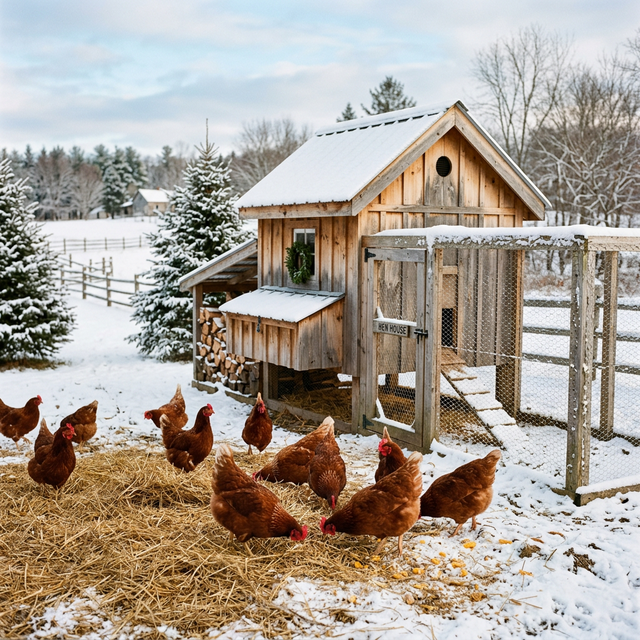
When the first frost hits, many new homesteaders panic and rush a heat lamp into their chicken coop. But here is the hard truth: Heat lamps kill more chickens via coop fires than the cold ever will.
Chickens are essentially wearing tiny down jackets all winter. They are incredibly cold-hardy animals. What they are NOT hardy against is moisture and drafts. Here is how to prep your coop correctly.
1. Ventilation Without Drafts
This is the most critical balance to strike. You need airflow at the *top* of the coop to allow the moisture from their breath and droppings to escape. If you aggressively seal your coop completely airtight, the moisture builds up. That moisture settles on their combs and wattles, freezes overnight, and causes frostbite.
- Keep vents open high above the roosting bars.
- Seal cracks and gaps at chicken-level so the wind cannot blow directly on them while they sleep.
2. The Deep Litter Method
Instead of constantly cleaning the coop down to the bare floor all winter, use the deep litter method. Start with a thick layer of pine shavings in the fall. Every week, rather than removing it, simply add a fresh layer on top.
The bedding at the bottom will begin to compost. As it breaks down, it naturally generates heat like an organic floor heater, keeping the coop surprisingly warm!
📋 Automate Your Animal Care Tasks
If you're tired of suddenly realizing you forgot to winterize the coop until the first snow hits, track your flock in HomesteadHelper Pro.
When you add Chickens to your app, it automatically populates your calendar with reminders to begin deep litter, check for mites, and winterize plumbing before the freezing temperatures hit.
Get HomesteadHelper Pro — $393. Liquid Water is Everything
A chicken cannot process food or create body heat without water. If their water freezes, their internal heater shuts off.
If you have electricity running to your coop, invest in a simple heated poultry waterer or a heated base plate for your existing fount. If you don't have electricity, you will need to commit to hauling fresh, liquid water out there twice a day when temperatures plunge below freezing.
4. Wider Roosting Bars
Are your roosting bars round broomsticks or narrow perches? Swap them for flat 2x4 boards (with the wide side facing up). When a chicken roosts on a flat board, they can settle completely down onto their feet, covering their toes with their warm breast feathers. On a round perch, their toes wrap around the wood and are exposed to the freezing air.