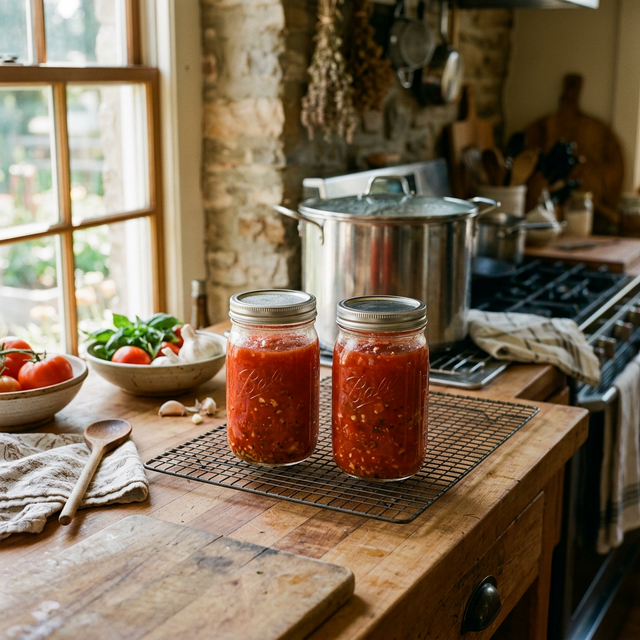
There is no greater feeling of homestead security than walking into a pantry lined with row upon row of jewel-toned glass jars. Canning your summer harvest ensures you eat organic, chemical-free food in the dead of winter, without paying a premium at the grocery store.
But the world of home canning is heavily steeped in science. The goal is to perfectly preserve flavor while completely obliterating bacteria—specifically, the fatal spores of Clostridium botulinum.
The Two Rules of Canning
Before you buy your first jar, you must understand the difference between the two primary methods of preservation.
1. Water Bath Canning (High Acid Foods Only)
This is the gateway to canning. You simply submerge sealed jars into a large pot of boiling water (212°F / 100°C) for a specified amount of time. The heat kills yeast, molds, and common bacteria, while the acidity of the food prevents botulism from surviving.
- Safe for: Jellies, jams, most fruits, pickles, and tomatoes (with added lemon juice or citric acid).
- Equipment needed: Any large, deep pot with a lid, and a metal or silicone rack for the bottom so the jars don't touch the direct heat source.
2. Pressure Canning (Low Acid Foods)
Boiling water physically cannot get hotter than 212°F. However, botulism spores can survive that temperature in low-acid environments. To kill them, you must heat the jars to 240°F (115°C). The only way to achieve temperatures higher than boiling is by processing the jars under intense, trapped pressure.
- Safe for: All meats, poultry, fish, un-pickled vegetables (green beans, corn, carrots), and soups/broths.
- Equipment needed: A dedicated Stovetop Pressure Canner (NOT an InstantPot or an electric pressure cooker, which cannot reach or maintain the required PSI safely).
📅 Never Miss Your Harvest Window
The biggest disaster in canning season is realizing you missed the peak harvest window because you didn't check the garden for three days. Overripe vegetables turn into mush in the pressure canner.
HomesteadHelper Pro features a dynamic Garden Planner. Try entering your planting dates, and it will automatically drop "Harvest Windows" directly onto your built-in farm calendar so you know exactly which week to begin prepping your jars.
Get HomesteadHelper Pro — $393 Safety Mantras for Beginners
1. Never Use "Rebel" Recipes
Always use tested recipes from trusted scientific sources like the National Center for Home Food Preservation (NCHFP) or the Ball Blue Book. Grandma's 80-year-old recipe might be delicious, but tomato acid levels have changed over generations, and 1940s safety standards are no longer recommended.
2. Never Re-Use Canning Lids
Mason jars consist of a glass jar, a metal screw band, and a flat metal lid with a vital rubber gasket. Jars and screw bands can be reused for years. The flat lids must be thrown away after one use. Once the rubber gasket has been heated and compressed against the glass, it will never reform a secure seal again.
3. Adjust for Altitude
Water boils at a lower temperature at higher elevations. If you live above 1,000 feet above sea level, you must adjust your processing times (for water bath) or your PSI pressure weights (for pressure canning) according to your recipe's chart. Failing to do so means your food hasn't reached the required kill-temperature.